
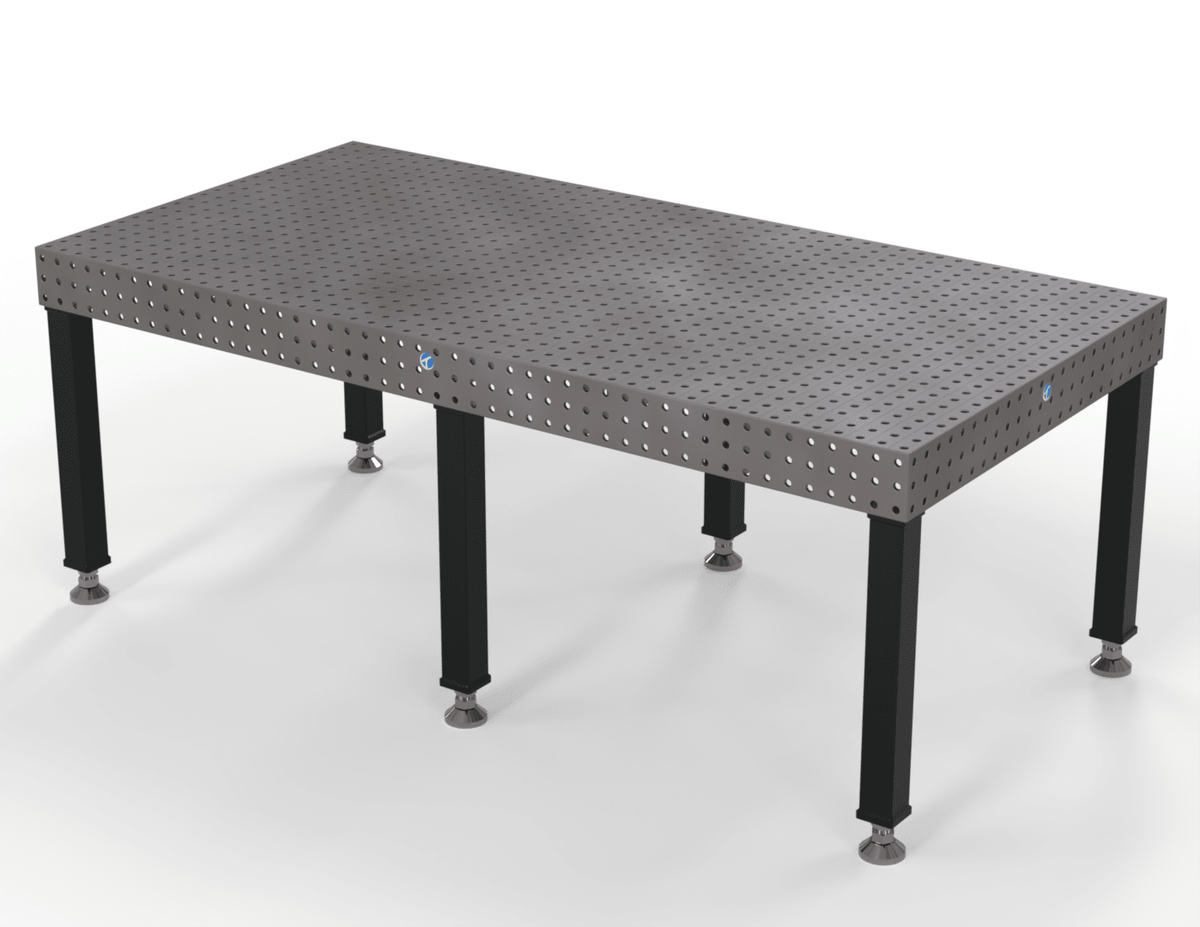
How to Maintain a Nitrided Steel Welding Fixture Table
A nitrided steel fixture table is one of the most valuable assets in a fabrication or welding shop. Designed for precision, durability, and repeatable setups, these tables can withstand years of heavy use when properly maintained. While the nitrided surface offers superior hardness and corrosion resistance compared to untreated steel, routine care is still essential to maximize its lifespan and maintain accuracy.
In this guide, we'll cover the best practices for fixture table maintenance, including the proper use of cleaning brushes, oil stone, and WD40 to keep your welding table in top condition.
Why Fixture Table Maintenance Matters
A precision fixture table is the foundation of accurate fabrication. Dirt, weld spatter, grinding dust, and rust can all interfere with fixture placement and reduce the accuracy of your setups.
Regular maintenance helps:
- Maintain flatness and precision
- Prevent corrosion
- Reduce weld spatter buildup
- Extend the life of the nitrided surface
- Improve repeatability in welding and fabrication projects
Investing just a few minutes after each job can save hours of rework later.
Daily Cleaning After Welding
Every welding project leaves behind debris. Metal shavings, grinding dust, and weld spatter should be removed before they accumulate.
Start by using cleaning brushes with nylon or brass bristles to remove loose debris from the tabletop and fixture holes. These brushes are effective without unnecessarily scratching the nitrided surface.
Compressed air or a shop vacuum can then remove fine particles from the table and hole pattern.
Keeping the table clean ensures clamps, locator pins, and accessories seat correctly every time.
Remove Weld Spatter Before It Hardens
Although nitrided fixture tables naturally resist weld spatter better than untreated steel, buildup should still be removed promptly.
For light spatter, a plastic scraper or brass tool is usually sufficient. Avoid aggressive grinding directly on the table surface whenever possible, as excessive abrasion can affect the table's precision over time.
Preventing heavy buildup is far easier than removing it later.
Using an Oil Stone to Maintain the Surface
One of the most overlooked maintenance tools is an oil stone. After extended use, small, raised burrs can develop from accidental hammer strikes or spatter removal. Even tiny high spots can affect fixture accuracy.
A fine oil stone allows you to gently remove these raised imperfections without significantly altering the table's flatness. Light, even strokes are all that's needed. The goal is to remove only the high spots—not to grind the entire surface.
Using an oil stone periodically helps preserve the precision expected from a professional fixture table.
Prevent Rust with WD40
Although nitriding improves corrosion resistance, moisture and shop humidity can still cause surface rust over time.
After cleaning the table, apply a light coat of WD40 to protect the surface, especially if the table will sit unused for several days. Wipe away any excess before beginning your next welding project to prevent contamination of workpieces.
A thin protective film helps reduce oxidation while keeping the table looking its best.
Keep Fixture Holes Clean
Precision hole patterns are the heart of every fixture table. Debris inside these holes can prevent clamps and locator pins from seating properly, reducing setup accuracy.
Use appropriately sized cleaning brushes and compressed air to remove chips, slag, and dust. Never force accessories into dirty holes, as this can damage both the tooling and the table.
Clean fixture holes also make setup faster and more consistent.
Avoid Common Fixture Table Mistakes
Even the toughest nitrided tables benefit from proper handling.
Avoid these common mistakes:
- Grinding directly on the fixture table
- Using steel chisels to remove spatter
- Dragging heavy fabrications across the surface
- Leaving moisture or coolant on the table overnight
- Ignoring burrs that can be removed with an oil stone
- Skipping routine cleaning after welding
Small habits can significantly impact the long-term accuracy of your table.
Recommended Fixture Table Maintenance Schedule
After Every Welding Job
- Remove weld spatter
- Brush away chips and grinding dust using cleaning brushes
- Clean fixture holes
- Wipe the surface clean
Weekly
- Inspect for surface damage
- Check fixture holes for buildup
- Remove small burrs using an oil stone when needed
Monthly
- Thoroughly inspect the table for wear
- Apply a protective coating of WD40
- Verify table stability and leveling
- Clean and inspect clamps, locator pins, and accessories
Long-Term Benefits of Proper Maintenance
Consistent maintenance delivers measurable advantages:
- Longer fixture table life
- Improved welding accuracy
- Faster fixture setup
- Better clamp performance
- Reduced corrosion
- Lower maintenance costs
- More consistent fabrication quality
A few minutes of maintenance each day can preserve the precision of your fixture table for many years.
Final Thoughts
A nitrided fixture table is built for demanding welding and fabrication environments, but its performance depends on regular care. Using cleaning brushes to remove debris, an oil stone to eliminate raised burrs, and WD40 to protect against corrosion are simple practices that help maintain the table's precision and extend its service life.
Whether you're performing high-volume production welding or custom fabrication, proper fixture table maintenance ensures accurate setups, reliable clamping, and consistent results on every project.